February 14, 2013

Top 40 Twins Prospects of 2013: 25, 24, 23, 22, 21

Also in this series: 1-5, 6-10, 11-15, 16-20, 26-30, 31-35, 36-40.

25. Nate Roberts | Left Field | DOB: 2/89 | Bats: Left | Draft: 2010-5

YEAR     LV      PA      AVG      OBP      SLG     HR    XBH     BB     SO
2010     RK+    153     .336     .444     .547      5     16     21     29
2011     A-     283     .302     .443     .446      4     20     28     48
2012     A-     352     .299     .433     .427      4     25     44     37

Nate Roberts has moved very slowly through the system since being drafted in the fifth round out of High Point University in 2010, in part because the Twins have refused to promote him and in part because he's rarely stayed healthy. He'll turn 24 years old before playing a game above low Single-A and spent back-to-back seasons in Beloit despite hitting .302/.443/.446 there as a 22-year-old the first time around.

That might suggest the Twins don't think much of Roberts' potential, but they gave him a spot in the Arizona Fall League and he hit .446/.565/.662 in 19 games. He led the country in on-base percentage as a college junior and has gotten on base at a .439 clip in the minors, combining patience and strike zone control with an amazing ability to get hit by pitches. Dating back to his final college season Roberts has been plunked 81 times in 235 games.

Along with being an on-base machine Roberts also has 41 steals in 179 games as a pro, but his power has been limited with just 13 homers and he's strictly a corner outfielder defensively. It's tough to get too excited about Roberts' future until he stays healthy and faces more advanced competition, but hopefully the dominant AFL stint convinces the Twins to at least push him aggressively at age 24.

24. Daniel Santana | Shortstop | DOB: 11/90 | Bats: Switch | Sign: Dominican

YEAR     LV      PA      AVG      OBP      SLG     HR    XBH     BB     SO
2010     RK+    144     .264     .285     .421      4     13      3     30
         A-     144     .238     .289     .315      0      7      7     40
2011     A-     409     .247     .298     .373      7     27     25     98
2012     A+     547     .286     .329     .410      8     38     29     77

Daniel Santana all but fell off the prospect map following a 2011 season in which he hit just .247/.298/.373 and moved around the diamond defensively at low Single-A, but the switch-hitter from the Dominican Republic stepped up to high Singe-A last year and showed enough promise to think he can have a big-league future. Santana batted .286 with 38 extra-base hits in 121 games, swiped 17 bases, and struck out in just 14 percent of his plate appearances.

With that said, his overall .286/.329/.410 line wasn't particularly impressive and he drew just 29 walks in 547 plate appearances while being thrown out on 11 of 28 steal attempts. In other words Santana is still pretty rough around the edges and there isn't much in his track record through age 22 to suggest he's capable of being more than a bottom-of-the-order bat. He's hit .266/.313/.398 for his career and hasn't cracked a .750 OPS since rookie-ball in 2008.

Defensively, however, Santana gets positive reviews as both a shortstop and second baseman. He alternated middle infield spots with 2011 first-round pick Levi Michael for much of last season, but Santana eventually emerged as Fort Myers' primary shortstop. If he can remain an asset at shortstop Santana could hit enough to be a decent starter there, but right now he seems to be on the utility infielder track.

23. Zack Jones | Reliever | DOB: 12/90 | Throws: Right | Draft: 2012-4

YEAR     LV      G     GS      ERA        IP       H     HR      SO     BB
2012     RK+     6      0     0.00       6.0       2      0       9      4
         A-     12      0     3.21      14.0       9      1      25      7

Zack Jones had mediocre results in three years at San Jose State, posting a 4.11 ERA in 138 innings spent mostly as a reliever, but his mid-90s fastball and high strikeout rate convinced the Twins to make him their fourth-round pick in June. Jones started eight games in his final college season, but Baseball America's pre-draft scouting report noted that "scouts view him as a reliever" because he lacked a quality third pitch to go with a fastball and slider.

Jones debuted at rookie-level Elizabethon and then moved up to low Single-A Beloit, throwing 20 total innings while working exclusively out of the bullpen. He overpowered hitters, holding them to a .159 batting average and striking out 34 of the 81 batters he faced, but also walked 11. While the Twins are hoping some of the college relievers they drafted in June can become starters, it sounds like Jones and the organization both prefer him in the bullpen.

Even in short outings his control needs a lot of work. He limited walks in his final season at SJSU, but Jones' overall walk rate in college was 4.4 per nine innings and he issued 5.0 walks per nine innings in his admittedly brief pro debut. Still, as a hard-throwing reliever Jones potentially could move very quickly through the minors and has a decent chance to be the Twins' first 2012 draft pick to reach to the majors.

22. Amaurys Minier | Shortstop | DOB: 1/96 | Bats: Switch | Sign: Dominican

As part of MLB's new collective bargaining agreement the Twins were allowed to spend a total of $2.9 million on international prospects last year and they gave $1.4 million of that to 16-year-old Amaurys Minier, a switch-hitting infielder from the Dominican Republic. Ranked by Baseball America as the 12th-best international prospect in last year's signing class, Minier is currently a shortstop but is expected to move to third base once his 6-foot-2 frame fills out.

According to David Rawnsley of Perfect Game he "has immense power from both sides of the plate" but "doesn't have the athleticism" to stick at shortstop. Ben Badler of Baseball America reports that Minier "has drawn attention for his bat speed and plus power from both sides of the plate" with "one of the sweeter swings in the Dominican." However, he added that "scouts have reservations about his ability to hit in games, so his pitch recognition skills will have to improve."

Three years ago the Twins signed Miguel Sano out of the Dominican Republic as a 16-year-old for $3.15 million, but making that type of investment is no longer feasible under the CBA and the $1.4 million they spent on Minier is more than all but three international prospects got in 2012. That doesn't mean he's destined for stardom, but Minier is definitely a high-upside prospect and it's always nice to see the Twins adding a potential impact bat to the system.

21. Michael Tonkin | Reliever | DOB: 11/89 | Throws: Right | Draft: 2008-30

YEAR     LV      G     GS      ERA        IP       H     HR      SO     BB
2010     RK+    10      0     1.08      25.0      18      1      26      4
         A-     13     12     4.29      65.0      76      7      40     18
2011     A-     48      3     3.87      76.2      82      3      69     24
2012     A-     22      0     1.38      39.0      29      1      53      9
         A+     22      0     2.97      30.1      24      2      44     11

Michael Tonkin is a former 30th-round pick for whom "Jason Kubel's brother-in-law" was once his claim to fame, but he's thrived since moving to the bullpen full time in mid-2011 and last year dominated between two levels of Single-A to emerge as someone to watch. Tonkin racked up 90 strikeouts in 69 total innings while holding opponents to a .209 batting average and three homers, posting a 2.09 ERA at age 22.

Plenty of relievers put up great numbers in the low minors every season, but few are 6-foot-7 with mid-90s fastballs like Tonkin. He's moved methodically through the farm system, finally reaching high Single-A midway through his fifth pro season, but that was in part because Tonkin was trying to stick as a starter early on and now that he's in the bullpen to stay there's the potential to rise pretty quickly.

His time as a starter helped develop a three-pitch fastball/slider/changeup repertoire that misses lot of bats and induces a decent number of ground balls. And for a big guy with a big fastball his control isn't bad either, with 20 walks in 69 innings last season and 2.3 walks per nine innings for his career. It's usually silly to get excited about Single-A relievers, but Tonkin's combination of raw stuff, size, and performance since shifting to the bullpen is very encouraging.


This week's blog content is sponsored by "[Expletive deleted] New Yorker Cartoon Captions," where an imbecile desperately tries to win the "New Yorker" cartoon caption contest. Please support them for supporting AG.com.

February 13, 2013

Top 40 Twins Prospects of 2013: 30, 29, 28, 27, 26

Also in this series: 1-5, 6-10, 11-15, 16-20, 21-25, 31-35, 36-40.

30. Kennys Vargas | First Base | DOB: 8/90 | Bats: Switch | Sign: Puerto Rico

YEAR     LV      PA      AVG      OBP      SLG     HR    XBH     BB     SO
2010     RK-    160     .324     .388     .507      3     19     13     40
2011     RK+    191     .322     .377     .489      6     17     15     50
2012     A-     186     .318     .419     .610     11     22     28     41

Miguel Sano was the big draw in Beloit last season but Kennys Vargas actually had the highest OPS on the team by more than 100 points, hitting .318/.419/.610 with 11 homers and 10 doubles in 41 games. He also put up big numbers in rookie-ball during the previous three seasons and the 6-foot-5, switch-hitting first baseman has a .309/.390/.509 career line with 68 extra-base hits and 73 walks in 159 games through age 21. That's the good news.

The bad news is that he's played just 159 career games thanks to serving a 50-game suspension after being busted in 2011 for a weight loss drug used to speed metabolism. And as you might expect from a 6-foot-5 slugger who struggles to control his weight Vargas isn't much of a defender at first base and has struck out 173 times in 667 plate appearances. He's big and slow and swings through a lot of pitches, but Vargas' power potential is very intriguing.

Of course, he was also somewhat old for the level of competition in the Midwest League and as far as player types go low-minors sluggers with high strikeout rates who're destined to wind up at designated hitter don't have a particularly good track record of long-term success. This year should tell a lot about Vargas as he moves up to high Single-A and hopefully puts in a full season for the first time at age 22.

29. B.J. Hermsen | Starter | DOB: 12/89 | Throws: Right | Draft: 2008-6

YEAR     LV      G     GS      ERA        IP       H     HR      SO     BB
2010     RK+     8      6     3.32      38.0      39      2      39      4
         A-     12     12     5.00      72.0      85      6      46     15
2011     A-     21     20     3.10     124.2     131     10      81     31
         A+      5      5     4.39      26.2      34      1      20      6
2012     A+      4      4     0.78      23.0      16      1      12      5
         AA     22     22     3.22     139.2     145     12      75     25

B.J. Hermsen has nice-looking ERAs and win-loss records at every stop since the Twins grabbed him in the sixth round of the 2008 draft out of an Iowa high school, but his secondary numbers have consistently been underwhelming. Last season he went 12-6 with a 2.88 ERA between high Single-A and Double-A on the way to being named Twins minor league pitcher of the year, but managed just 87 strikeouts in 163 innings and has a career rate of 5.9 per nine innings.

Also worrisome is that after being touted as a hard-thrower coming out of high school the 6-foot-5 right-hander has typically worked in the high-80s with his fastball as a pro. He has excellent control and the ability to pump strikes at inexperienced hitters has no doubt played a big part in his low-minors success, but when a pitcher can't crack five strikeouts per nine innings versus Single-A and Double-A hitters it's tough to take him seriously as a prospect.

There are certainly pitchers who find some big-league success with miniscule strikeout rates, but most of them missed a fair number of bats in the minors and also induce lots of ground balls. Hermsen does neither of things and never has. Throwing strikes and knowing how to pitch have gotten him this far, but it's hard to see Hermsen developing into more than a back-of-the-rotation starter unless something changes.

28. Tyler Duffey | Reliever | DOB: 12/90 | Throws: Right | Draft: 2012-5

YEAR     LV      G     GS      ERA        IP       H     HR      SO     BB
2012     RK+    12      0     1.42      19.0      10      1      27      2

Drafted in the fifth round as part of the team's focus on college relievers, Tyler Duffey and Twins second-round pick J.T. Chargois were co-closers for Rice University. Duffey can't match Chargois' dominant raw stuff, but prior to the draft Baseball America's scouting report had him throwing in the low-90s with a good slider and his 2012 numbers were even better than Chargois' with a 1.93 ERA and 68-to-21 strikeout-to-walk ratio in 51 innings.

Duffey also had a 2.52 ERA and 76-to-18 strikeout-to-walk ratio in 61 innings for Rice in 2011 and struck out a total of 189 batters in 153 college innings. And unlike Chargois there's apparently some hope that Duffey's changeup is good enough to make it as a starter. However, for his debut Duffey was assigned to rookie-level Elizabethton and worked out of the bullpen, throwing 19 innings with a 1.42 ERA and 27-to-2 strikeout-to-walk ratio.

Those numbers are obviously incredible, but a 21-year-old college reliever thriving against rookie-ball hitters doesn't prove much of anything. Assuming the Twins eventually decide to actually test Duffey a little bit he could move pretty quickly up the organizational ladder as a reliever, but if they're serious about giving him an opportunity to start that whole process would probably take significantly longer.

27. Corey Williams | Reliever | DOB: 7/90 | Throws: Left | Draft: 2011-3

YEAR     LV      G     GS      ERA        IP       H     HR      SO     BB
2011     RK+     7      0     3.86      11.2      12      0      11      5
2012     A-     47      0     3.47      62.1      55      5      68     33

Before binging on hard-throwing college relievers in last year's draft the Twins used their 2011 third-round pick on Vanderbilt left-hander Corey Williams, whose 4.49 ERA didn't match his impressive velocity out of the bullpen. As a draft-eligible sophomore he was a tough sign and the Twins had to spend $575,000 to lure Williams into pro ball, doubling the recommended slot bonus amount.

Williams had a solid seven-appearance debut at rookie-ball after signing and then moved up to low Single-A last season, throwing 62 innings with a 3.47 ERA and 68-to-33 strikeout-to-walk ratio. He overpowered left-handed hitters, holding them to a .179 batting average and 24 strikeouts in 67 plate appearances, but had much less success versus right-handed hitters and struggled to consistently throw strikes overall.

Williams had 54 strikeouts in 55 innings for Vanderbilt and has whiffed 79 in 74 innings as a pro, which are far from exceptional strikeout rates for a reliever with a mid-90s fastball facing SEC and Midwest League hitters. On the other hand he's still just 22 years old and induces lots of ground balls to go with the good but not great number of missed bats, so Williams certainly has considerable upside as a potential late-inning reliever.

26. Adam Walker | Right Field | DOB: 10/91 | Bats: Right | Draft: 2012-3

YEAR     LV      PA      AVG      OBP      SLG     HR    XBH     BB     SO
2012     RK+    254     .250     .310     .496     14     25     19     76

Adam Walker's professional debut looked exactly like his college numbers suggested it would, as the third-round pick from Jacksonville University filled the stat sheet for rookie-level Elizabethton with extra-base hits and strikeouts. Rarely do the Twins draft college hitters in the early rounds, especially college hitters with big strikeout totals, so they clearly saw something they really liked in Walker's power potential.

And there's no doubting his ability to hit the ball a long way. Walker blasted 41 homers and 51 doubles in 168 college games and went deep 14 times in 58 games in Elizabethton, posting a .246 Isolated Power that was second-best in the entire Appalachian League. Unfortunately all that pop came with extreme contact issues, as he whiffed 184 times in 168 college games despite facing less than elite competition and struck out 76 times in 58 rookie-ball games at age 20.

Those are alarming strikeout totals and become an even bigger red flag when combined with just 19 walks in 254 plate appearances for Elizabethton. Over the years the Twins' farm system has been short on power-hitting corner outfielders and homers can certainly make up for a lot of other flaws, but until Walker cuts down on the strikeouts and posts a decent batting average there will be plenty of reason for skepticism that he can clobber more advanced pitching.


This week's blog content is sponsored by "[Expletive deleted] New Yorker Cartoon Captions," where an imbecile desperately tries to win the "New Yorker" cartoon caption contest. Please support them for supporting AG.com.

January 31, 2013

Top 40 Twins Prospects of 2013: 35, 34, 33, 32, 31

Also in this series: 1-5, 6-10, 11-15, 16-20, 21-25, 26-30, 36-40.

35. Pedro Hernandez | Starter | DOB: 4/89 | Throws: Left | Trade: White Sox

YEAR     LV      G     GS      ERA        IP       H     HR      SO     BB
2010     A-     29     13     4.04     100.1     122      6      79     17
2011     A+     15      6     2.70      56.2      52      3      44      6
         AA      9      8     3.48      41.1      39      4      43     10
         AAA     4      4     6.00      18.0      28      3       7      6
2012     AA     12     12     2.75      68.2      68      6      37     18
         AAA     7      6     4.46      34.1      43      2      28      4
         MLB     1      1    18.00       4.0      12      3       2      1

Pedro Hernandez was signed by the Padres out of Venezuela as a 17-year-old in 2006, traded to the White Sox as part of the package for Carlos Quentin in 2011, and acquired by the Twins along with Eduardo Escobar in the Francisco Liriano deal. He appeared in one game for the White Sox last season, getting clobbered for eight runs in four innings on July 18 against the Red Sox, and spent the rest of the year at Double-A and Triple-A.

He throws in the low-90s with more fly balls than ground balls and struggled to miss bats after advancing beyond Single-A, producing just 65 strikeouts in 103 innings last season. In the minors at least he's been able to offset all that somewhat with very good control, walking just 1.6 batters per nine innings for his career, but the left-hander has limited upside despite not yet turning 24 years old.

Hernandez has little chance to make the team out of spring training, but he has a spot on the 40-man roster and that means when the Twins need pitching reinforcements during the season he'll jump to the front of the line with any sort of decent work in Rochester. If things go well he could wind up as a useful back-of-the-rotation starter, but Hernandez struggled against right-handed hitters last year and a shift to the bullpen may be his best path to the majors.

34. Jason Wheeler | Starter | DOB: 10/90 | Throws: Left | Draft: 2011-8

YEAR     LV      G     GS      ERA        IP       H     HR      SO     BB
2012     A-     27     27     3.45     156.2     170     12     115     43

Jason Wheeler was a mess in his first two college seasons, but put together a solid junior year at Loyola Marymount in 2011 and was drafted by the Twins in the eighth round. He signed too late to debut, so the 6-foot-8, 250-pound left-hander began his pro career last season at low Single-A by going 14-6 with a 3.45 ERA in 27 starts. Meanwhile his brother, third base prospect and 2009 fifth-round pick Ryan Wheeler, made his MLB debut for the Diamondbacks.

Wheeler's nice-looking ERA and win-loss record overstate how well he pitched for Beloit, as he got a ton of run support from a stacked, Miguel Sano-led lineup and managed just 115 strikeouts in 157 innings. He did a decent job limiting homers, but Wheeler induced a modest number of ground balls, allowed opponents to hit .281 off him, and showed mediocre control with 2.5 walks per nine innings.

Physically he's among the largest pitchers in baseball, minors or majors, but Wheeler works in the high-80s and low-90s with his fastball. If the Twins' coaches can somehow figure out how to turn his massive frame into added velocity at age 22 he could be a breakout candidate, but short of that Wheeler looks like a potential back-of-the-rotation starter who does most things reasonably well without any standout skill.

33. Adrian Salcedo | Starter | DOB: 4/91 | Throws: Right | Sign: Dominican

YEAR     LV      G     GS      ERA        IP       H     HR      SO     BB
2010     RK+    16      8     3.27      66.0      55      3      65     10
         A+      6      6     6.26      27.1      42      3      16      8
2011     A-     29     20     2.93     135.0     131      4      92     27
2012     A+      8      7     6.39      25.1      33      1      14     15

In the low minors Adrian Salcedo looked like a high-upside prospect, but his stock dropped along with his strikeout rate against more experienced competition and he missed most of last season after being hit in the face by a line drive. He threw just 31 ineffective innings, wasn't picked in the Rule 5 draft after being left off the 40-man roster, and will be 22 years old by the time he throws his first pitch above Single-A.

Signed out of the Dominican Republic in 2007 as a 16-year-old, Salcedo has just 72 walks in 386 innings for a rate of 1.7 per nine frames. Brad Radke's career walk rate was 1.6 per nine innings, so for Salcedo to show that type of pinpoint control so early in his career is extremely impressive. Unfortunately his strikeouts per nine innings fell from 8.6 in rookie-ball to 6.1 at low Single-A to 5.1 at high Single-A, where Salcedo has a 6.32 ERA in 53 innings.

Salcedo's low-90s fastball and overall raw stuff have always gotten positive reviews, but even before the injury the 6-foot-4 right-hander was trending in the wrong direction. Being a control artist in the majors is one thing, but most successful low-strikeout, low-walk starters actually managed decent strikeout rates in the minors. He's still young enough to bounce back from the lost year of development time, but Salcedo's status as a quality prospect is shaky.

32. Tyler Robertson | Reliever | DOB: 12/87 | Throws: Left | Draft: 2006-3

YEAR     LV      G     GS      ERA        IP       H     HR      SO     BB
2010     AA     27     27     5.41     144.2     181     17      91     57
2011     AA     55      0     3.61      89.2      87      6      88     29
2012     AAA    33      0     3.77      28.2      26      2      33     13
         MLB    40      0     5.40      25.0      21      4      26     14

Once upon a time Tyler Robertson ranked among the Twins' best pitching prospects, but his strikeout rate deteriorated as his climbed the organizational ladder and injuries kept him from maintaining peak velocity. After an ugly 2010 season at Double-A the Twins decided they'd seen enough of Robertson as a starter, shifting the 6-foot-5 left-hander to the bullpen. He fared well there with a 3.65 ERA and 121 strikeouts in 118 innings between Double-A and Triple-A.

That earned him a June call-up and Robertson struck out the first four big leaguers he faced, but he struggled to consistently throw strikes and finished with a 5.40 ERA in 25 innings. He actually dominated lefties with a .190 batting average and 22-to-6 strikeout-to-walk ratio, but righties hit .290 with more walks than strikeouts. His splits were similarly extreme at Triple-A, so Robertson needs to show that he can avoid being a liability against righties.

His high-80s fastball is reason for skepticism in that area, although the off-speed repertoire from his days as a starter should come in handy. If he can improve versus righties Robertson has a chance to be a ground ball-getting setup man, but if not he'll likely be limited to a southpaw specialist role. Either way, this season will be key for Robertson because at age 25 he may not get a particularly long leash.

31. Madison Boer | Starter | DOB: 12/89 | Throws: Right | Draft: 2011-2

YEAR     LV      G     GS      ERA        IP       H     HR      SO     BB
2011     RK+    15      0     2.60      17.1      13      1      31      2
         A-      8      0     6.75       8.0      12      0      12      1
2012     A-      5      5     3.58      27.2      26      1      20     10
         A+     22     19     6.41     111.0     147     15      66     32

Picked out of Oregon in the second round of the 2011 draft, Madison Boer posted a ridiculous 43-to-3 strikeout-to-walk ratio in his 25-inning debut that year. Unfortunately none of that carried over to his first full season, as the 6-foot-4 right-hander from Eden Prairie got knocked around for a 5.84 ERA in 139 innings between two levels of Single-A, allowing opponents to hit .309 while managing just 5.6 strikeouts per nine innings.

Boer's lack of missed bats isn't a total shock after he struck out just 74 batters in 99 innings during his final college season and Baseball America noted before the draft that his velocity fell from the mid-90s as a reliever to the low-90s as a starter. Still, there's no way a 22-year-old top-100 pick with big-time college experience should struggle that much at Single-A, particularly after toying with rookie-ball hitters.

Boer is already 23 years old, so if he continues to struggle as a starter it'll be interesting to see how long the Twins wait to shift him to the bullpen. That's certainly not a guaranteed fix, but it would allow him to focus on the fastball-slider combo that drew pre-draft praise and would likely provide a much quicker path to the majors. At this point, though, Boer simply needs to get back to pitching well again regardless of the role.

This week's blog content is sponsored by Peter David Benson's book "All Babies Suck," which is available on Amazon.com as a free Kindle download. Please support him for supporting AG.com.

January 24, 2013

Top 40 Twins Prospects of 2013: 40, 39, 38, 37, 36

Also in this series: 1-5, 6-10, 11-15, 16-20, 21-25, 26-30, 31-35.

40. Ryan Pressly | Reliever | DOB: 12/88 | Throws: Right | Rule 5: Red Sox

YEAR     LV      G     GS      ERA        IP       H     HR      SO     BB
2010     A-     26     24     3.72     113.2     110      9      96     43
2011     A+     26     26     4.50     130.0     125      9      72     53
2012     A+     20     12     6.28      76.0      86      9      61     26
         AA     14      0     2.93      27.2      23      2      21     10

Picking fourth in the annual Rule 5 draft the Twins selected Double-A right-hander Ryan Pressly from the Red Sox, who originally picked him out of a Texas high school in the 11th round of the 2008 draft. Pressly's numbers as a starter aren't pretty, but he shifted to the bullpen at Double-A in the second half last year and threw 28 innings with a 2.93 ERA and 21-to-10 strikeout-to-walk ratio. And then he thrived in the Arizona Fall League with an 18/1 K/BB ratio in 14 innings.

Rule 5 picks must stick in the majors all season or be offered back to their original team for half of the $50,000 selection fee, although teams can work out a side deal to get around that like the Twins and Braves did with Scott Diamond in 2011. Last winter the Twins touted Terry Doyle's performance in the Arizona Fall League after taking him from the White Sox with the second pick in the Rule 5 draft, only to let him go midway through spring training.

Doyle was a 26-year-old, low-velocity control pitcher, whereas Pressly is a 24-year-old with what Jonathan Mayo of MLB.com described in his Rule 5 preview as "a big arm that can fire fastballs in the mid-90s and ... an outstanding power curve." Of course, he's still a long shot to crack the Opening Day roster and at this point Pressly's resume includes 400 innings of mediocre pitching as a starter and 40 innings of good pitching as a reliever.

39. Eduardo Escobar | Shortstop | DOB: 1/89 | Bats: Switch | Trade: White Sox

YEAR     LV      PA      AVG      OBP      SLG     HR    XBH     BB     SO
2010     A+     408     .285     .327     .402      3     29     23     76
         AA     216     .262     .294     .376      3     14      9     35
2011     AAA    536     .266     .303     .354      4     31     27    104
2012     AAA    151     .217     .259     .304      1      7      8     26
         MLB    146     .214     .278     .260      0      5     11     31

Eduardo Escobar won the White Sox's utility infielder job out of spring training and collected dust on the bench until being traded to the Twins along with Pedro Hernandez for Francisco Liriano in August. Sent to Triple-A after the trade, he hit just .217/.259/.304 in 35 games for Rochester and then received a September call-up to Minnesota, where he hit just .227/.271/.227 in 14 games for the Twins.

In seven seasons as a minor leaguer Escobar has hit .267/.312/.348, including .255/.293/.343 in 167 games at Triple-A, so while he's still just 24 years old it's pretty safe to conclude that his defense will have to carry him. And it might, because Baseball America named Escobar the best defensive infielder in the White Sox's farm system for 2008, 2009, 2010, and 2011. Of course, even the slickest of fielders are destined for bench roles unless they can hit at least a little bit.

And so far at least it looks like Escobar can't hit, even a little bit. His power is non-existent, with a grand total of 15 homers in 2,700 plate appearances between the minors and majors, and both his plate discipline and strike zone control are severely lacking. Good-fielding middle infielders are hard enough to find that Escobar cracks this list despite those considerable flaws, with the hope that he's perhaps still capable of improving into "decent role player" territory.

38. Deolis Guerra | Reliever | DOB: 4/89 | Throws: Right | Trade: Mets

YEAR     LV      G     GS      ERA        IP       H     HR      SO     BB
2010     AA     19     19     6.24     102.1     127     14      67     37
         AAA     5      4     6.84      25.0      35      5      18      8
2011     AA     37     10     5.59      95.0     102     11      95     28
2012     AA      7      0     0.71      12.2       5      0      15      1
         AAA    29      0     4.87      57.1      59      7      56     21

Deolis Guerra is the Twins' last chance to squeeze more value out of the Johan Santana trade and at age 24 he remains in the organization after being dropped from the 40-man roster and passed through waivers unclaimed in November. When the Twins acquired Guerra from the Mets he was an 18-year-old starter and consensus top-50 prospect, but after years of struggling he shifted to the bullpen full time in the middle of last season

Guerra pitched very well as a reliever at Double-A down the stretch in 2011 and continued to thrive back in New Britain last year, earning a promotion to Triple-A in late April. His secondary numbers were solid in Rochester with a 56-to-21 strikeout-to-walk ratio in 57 innings, but Guerra served up seven homers on the way to posting a 4.87 ERA. He also missed some time with injuries and was bypassed for a September call-up despite then being on the 40-man roster.

Guerra no longer has much upside and has lost velocity since his teenage peak, but since moving to the bullpen his performance has been promising enough to suggest he can be a useful reliever. During the past one-and-a-half seasons he's thrown 124 innings out of the bullpen with a 3.56 ERA and 136-to-35 strikeout-to-walk ratio between Double-A and Triple-A, but he'll face an uphill climb to crack a Twins bullpen that appears pretty well set for 2013.

37. Josmil Pinto | Catcher | DOB: 3/89 | Bats: Right | Sign: Venezuela

YEAR     LV      PA      AVG      OBP      SLG     HR    XBH     BB     SO
2010     A-     392     .225     .295     .378     10     32     32     67
2011     A+     236     .262     .305     .389      5     17     12     36
2012     A+     393     .295     .361     .473     12     36     39     63
         AA      52     .298     .365     .553      2      7      4     10

Josmil Pinto appeared on this list in 2010, ranking 36th after impressive rookie-ball production, but back-to-back seasons with a sub-.700 OPS at Single-A followed. He repeated high Single-A last year and bounced back in a big way, hitting .295/.361/.473 in 93 games while controlling the strike zone well, and then hit .298/.365/.553 in 12 games at Double-A to finish the season. That convinced the Twins to add Pinto to the 40-man roster in November.

His lack of high-minors experience, inconsistent track record, and uncertain future defensively made Pinto's addition somewhat surprising, but clearly the Twins think the 23-year-old from Venezuela has a chance to be an impact bat. And he'll probably need to be to have significant value, because despite good caught stealing numbers Pinto draws mixed reviews as a catcher and saw about half of his action last season at designated hitter.

Generally speaking a 23-year-old part-time catcher, part-time designated hitter with barely any time above Single-A and a career .266/.337/.427 line is a long shot to develop into a quality big leaguer, but Pinto has shown flashes of noteworthy potential. This season should provide a big test both offensively and defensively, and by this time next year odds are Pinto will either be at least a dozen spots higher on this list or no longer on the 40-man roster.

36. Alex Wimmers | Starter | DOB: 11/88 | Throws: Right | Draft: 2010-1

YEAR     LV      G     GS      ERA        IP       H     HR      SO     BB
2010     A+      4      4     0.57      15.2       6      0      23      5
2011     A+     12      4     4.20      40.2      28      5      39     22
2012     AA      1      1     4.15       4.1       6      1       3      2

What a shame. Alex Wimmers' fast track to the majors was derailed in early 2011 by extreme control problems, which he conquered enough to throw a seven-inning no-hitter in his final start of the season only to blow out his elbow one start into last year. On the Twins' advice Wimmers initially tried to avoid going under the knife, but that simply delayed Tommy John surgery until August and could mean he won't pitch at all in 2013.

Once upon a time Wimmers was a polished, strike-throwing right-hander who won back-to-back Big Ten conference pitcher of the year awards at Ohio State on the way to being the Twins' first-round pick in 2010, but between the Steve Blass/Rick Ankiel-like control problems and elbow injury he's now 24 years old and has appeared in one game above Single-A. His career totals consist of 63 innings in three pro seasons.

Even if Wimmers successfully returns from elbow surgery it's impossible to guess what type of pitcher he's capable of being at this point and he was never considered a high-upside arm to begin with. For both Wimmers and the Twins it would be nice if he could get back on track enough to re-emerge as a potential back-of-the-rotation starter, but we may have to wait until 2014 to find out if that's at all possible.

This week's blog content is sponsored by Fresh Brewed Trivia at Granite City in Rosedale Center on Tuesday nights, where you can drink $3 tap beers and win prizes. Please support them for supporting AG.com.

April 5, 2012

Top 40 Twins Prospects of 2012: System Overview

Also in this series: 1-5, 6-10, 11-15, 16-20, 21-25, 26-30, 31-35, 36-40.
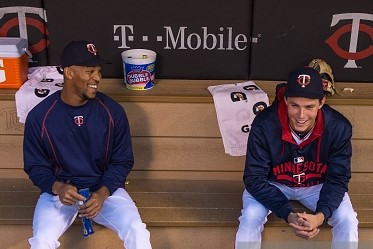
My annual series ranking and profiling the Twins' top prospects concluded last week, so here's the complete list of 40 players along with links to each individual write-up and an overview of the farm system as a whole:

 1. Miguel Sano, 3B               21. David Bromberg, SP
 2. Joe Benson, CF                22. Tom Stuifbergen, SP
 3. Aaron Hicks, CF               23. Matthew Summers, RP
 4. Eddie Rosario, 2B             24. Nate Roberts, LF
 5. Liam Hendriks, SP             25. Carlos Gutierrez, RP
 6. Oswaldo Arcia, RF             26. Manuel Soliman, SP
 7. Kyle Gibson, SP               27. Deolis Guerra, RP
 8. Levi Michael, SS              28. Pat Dean, SP
 9. Alex Wimmers, SP              29. B.J. Hermsen, SP
10. Brian Dozier, SS              30. Matthew Hauser, RP
11. Adrian Salcedo, SP            31. Tyler Grimes, SS
12. Chris Parmelee, 1B            32. Terry Doyle, SP
13. Travis Harrison, 3B           33. James Beresford, SS
14. Hudson Boyd, SP               34. Jairo Perez, 3B
15. Madison Boer, RP              35. Scott Diamond, SP
16. Niko Goodrum, SS              36. Tyler Robertson, RP
17. Max Kepler, LF                37. JaDamion Williams, RF
18. Angel Morales, LF             38. Dereck Rodriguez, CF
19. Corey Williams, RP            39. Anderson Hidalgo, 3B
20. Chris Herrmann, C             40. Kyle Waldrop, RP

Tsuyoshi Nishioka, Ben Revere, Rene Tosoni, Alex Burnett, Trevor Plouffe, and Luke Hughes each graduated from last season's top 40, exhausting their Rookie of the Year eligibility and prospect status, and the Twins also traded away Billy Bullock. Joining the organization since last year are 2011 draft picks Levi Michael, Travis Harrison, Hudson Boyd, Madison Boer, Corey Williams, Matthew Summers, Tyler Grimes, and Dereck Rodriguez.

The farm system's overall quality remained fairly stable compared to last year, as a handful of solid but unspectacular prospects advanced to the majors and a solid draft class was added to the mix. Miguel Sano, Joe Benson, Eddie Rosario, Liam Hendriks, Oswaldo Arcia, and Brian Dozier took significant steps forward, moving up in the rankings, but the opposite was true for Aaron Hicks, Kyle Gibson, Alex Wimmers, Angel Morales, and David Bromberg.

Sano is one of baseball's truly elite prospects and has as much upside as any hitter in the minors, but the system as a whole still lacks star power and is particularly short on high ceilings among prospects who've played above Single-A. In terms of potential 2012 impacts, Benson, Hendriks, Dozier, and Chris Parmelee are the best bets, with Carlos Gutierrez, Deolis Guerra, and Kyle Waldrop looming as near-future bullpen options.

Overall the Twins' farm system likely rates somewhere between average and slightly below average, with the strengths being Sano, outfield depth, and middle-of-the-rotation starter depth and the weaknesses being a lack of power hitters, power pitchers, and MLB-ready infielders. I've been ranking Twins prospects since 2007 and those have more or less been the farm system's same weaknesses every year since then.

Sano was a huge addition in mid-2009 and has so far lived up to every bit of the hype and then some, but since giving him a record $3.15 million bonus the Twins have fallen into the middle of the pack for international spending while failing to hit any home runs in the draft. They hold the No. 2 overall pick in June's draft thanks to last season's 99 losses and also have five other picks in the top 100, so hopefully that will change soon.

This is a crucial year for the rebuilding effort thanks to perhaps the most stacked collection of draft picks in team history, but also because of the development of Sano and Rosario in the low minors, Gibson's recovery from elbow surgery, and Wimmers' recovery from extreme control problems. Jumping from a below-average system to one of baseball's best prospect collections between now and this time next year is doable, although far from guaranteed.

For much of the time I've been ranking Twins prospects their system has been underrated somewhat by the fact that they typically had multiple young, prospect-aged guys in prominent big-league roles, which eliminates them from "prospect" consideration without really changing their impact on the team's long-term outlook. That is no longer the case, as Revere, Parmelee, Burnett, and Hendriks are the only 25-and-under players on the Opening Day roster.

Plenty of the regulars are still under 30, so the Twins' nucleus is far from elderly, but they're just no longer prospect-aged and so the top-40 list accurately represents the organization's young talent in a thorough way. With that said, here's how the system would look by blending the prospects in with the young veterans, resulting in the following 29-and-under depth chart for the Twins' entire organization:

CATCHER                    FIRST BASE/CORNER OF       CENTER FIELD
Joe Mauer, 29              Chris Parmelee, 24         Denard Span, 28
Drew Butera, 28            Trevor Plouffe, 26         Ben Revere, 24
J.R. Towles, 28            Rene Tosoni, 25            Joe Benson, 24
Chris Herrmann, 24         Oswaldo Arcia, 22          Aaron Hicks, 22
                           Max Kepler, 20             Angel Morales, 22
                           Nate Roberts, 23           Dereck Rodriguez, 20
                           JaDamion Williams, 21      Darrin Mastroianni, 26

SECOND BASE                SHORTSTOP                  THIRD BASE
Alexi Casilla, 27          Brian Dozier, 25           Danny Valencia, 27
Luke Hughes, 27            Levi Michael, 21           Miguel Sano, 19
Eddie Rosario, 20          Niko Goodrum, 20           Travis Harrison, 19
Tsuyoshi Nishioka, 27      Tyler Grimes, 21           Jairo Perez, 24
Adam Bryant, 23            James Beresford, 23        Anderson Hidalgo, 23
RIGHTY STARTER             LEFTY STARTER              RELIEVER
Anthony Swarzak, 26        Francisco Liriano, 28      Matt Capps, 28
Liam Hendriks, 23          Pat Dean, 23               Glen Perkins, 29
Kyle Gibson, 24            Scott Diamond, 25          Brian Duensing, 29
Alex Wimmers, 23                                      Alex Burnett, 24
Adrian Salcedo, 21                                    Jeff Manship, 27
Hudson Boyd, 18                                       Matt Maloney, 28
David Bromberg, 24                                    Kyle Waldrop, 26
Tom Stuifbergen, 23                                   Madison Boer, 22
Manuel Soliman, 22                                    Corey Williams, 21
                                                      Matthew Summers, 22
                                                      Carlos Gutierrez, 25
                                                      Deolis Guerra, 23
                                                      Matthew Hauser, 24
                                                      Tyler Robertson, 24
                                                      Lester Oliveros, 23
« Newer PostsOlder Posts »